Medical Debt and Your Credit Score — What Changed and What It Means for You
Medical debt rules changed in 2022-2023 but unpaid collections over $500 can still hurt. Learn what is removed, what remains, and how to protect your file.
TLDR
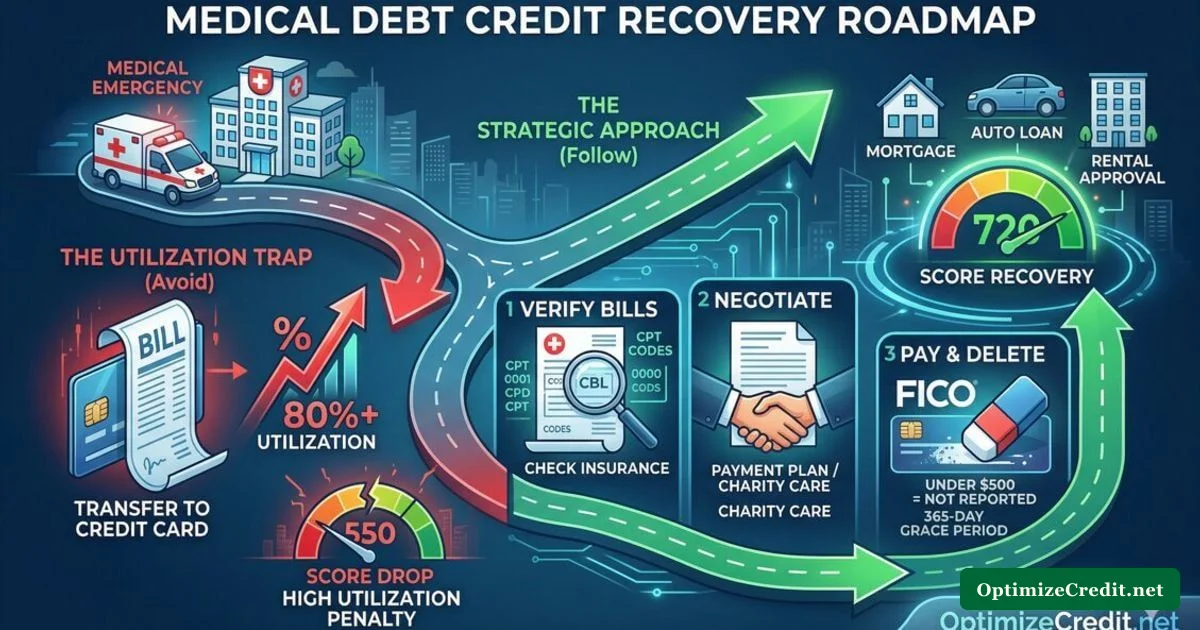
Medical debt is much less damaging than it used to be, but it is not universally invisible. The three major credit bureaus now remove paid medical collections, exclude collections under $500, and enforce a one-year waiting period before unpaid medical collections can appear. However, unpaid medical collections over $500 that survive the waiting period can still show up and affect scores, especially under older models like FICO 8. VantageScore 3.0 and 4.0 ignore medical collections entirely, and FICO 9 and 10 are more forgiving than older versions. The CFPB finalized a broader ban in January 2025, but it was vacated by a federal court in July 2025. The current system rewards active file management: verify bills before paying, use the one-year window for disputes and hardship applications, and do not assume every medical collection is valid or automatically harmless. For a personalized action plan, upload your credit report to OptimizeCredit.net’s free AI analyzer.
Medical Debt TL;DR
›Paid Collections: Automatically removed from all bureau reports.
›Under $500: No longer reported to Equifax, Experian, or TransUnion.
›One-Year Wait: Unpaid medical debt cannot report until 365 days after delinquency.
Medical debt is one of the weirdest things in the credit system because it behaves like a collections problem without starting as a normal credit decision.
You did not swipe a card for a vacation. You went to the ER, got lab work, had a surgery, or ended up in an out-of-network billing mess. For years, the credit-reporting system often treated that unpaid bill almost like a defaulted credit card. That is no longer fully true. But it is also not true that medical debt has disappeared from credit reporting altogether.
That is the key update for 2026: medical debt is much less damaging than it used to be, but it is not universally invisible.
The biggest nationwide changes came from the three credit bureaus' 2022–2023 policy shifts:
paid medical collections are removed
medical collections under $500 are not reported
unpaid medical collections get a one-year waiting period before they can appear
Upload your credit report and our Credit Analyzer identifies what may be holding your score back and provides a step-by-step report-based improvement plan.
Yes, sometimes. Unpaid medical collections over $500 that survive the one-year waiting period can still appear and affect scores, especially under stricter models like FICO 8.
Yes. Under the current bureau policies, paid medical collections should be removed from your credit reports instead of remaining as paid collection tradelines.
No. VantageScore 3.0 and 4.0 ignore medical collections, and FICO 9 and 10 are more forgiving than older FICO versions. But a reportable unpaid medical collection can still matter under older FICO models.
Generally about seven years from the original delinquency that led to the collection, subject to the FCRA timing rules. The account does not get a fresh seven years just because it is sold to a new collector.
Verify it before paying it. Check the amount, insurance responsibility, age of the account, and whether it is even reportable under the current under-$500 and one-year rules.
It finalized a rule in January 2025 that would have done that broadly, but CFPB now states that the rule was vacated by a federal court in July 2025.
Yes. While credit reporting rules have softened, the legal obligation to pay remains. A hospital or collection agency can sue you, obtain a judgment, and potentially garnish wages, even if the debt no longer appears on your credit report.
No. Applying for charity care or financial assistance programs is not a credit-seeking event and does not trigger a hard inquiry or negative mark. It is the best preventative step to keep a bill out of collections entirely.